Wednesday, 17 March 2010

Post 5: Who would be the audience for your media product


There will always be a gap in the market for Romantic Comedy films, with a constant plead from audiences for “Chick Flicks” it would be no surprise if a new romance based film would make it big. With romantic comedy films being very popular and after much deliberating we discussed whether making another romantic comedy film would be beneficial to us as distributors. The basic plot of a romantic comedy is that two protagonists, stereotypically a man and a woman, meet and go through the stages of romance together. Studies show that teenagers aged between 14-17 year of age enjoy watching romantic comedies as they can relate to the lives of the characters presented to them. The storyline may appear to be cliché and cheesy, but teen girls love that!

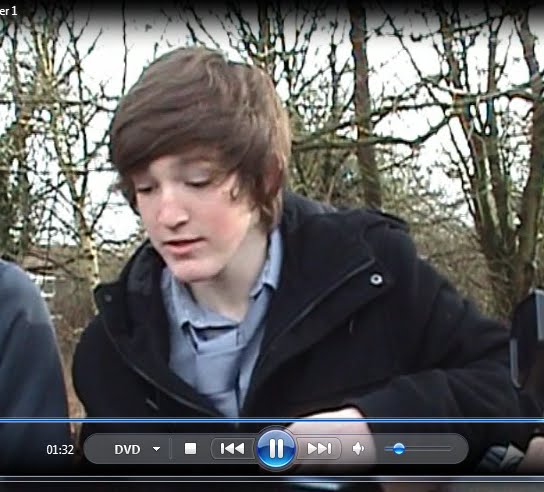
This is Samantha Biggerstaff; she is 16 years old and lives in Kings Langley. Samantha is photographed wearing her school uniform which appears to be smart clothes/office like wear. She enjoys spending time with her friends, shopping and watching films. Samantha enjoys films like Mean Girls, 10 things I hate about you, Princesses Diaries, House Bunny and Sex and The City. She enjoys watching the films at the cinema and then in a later date buying them on DVD and watching them in her friends company. TV programs that appeal to Samantha and her friends include Hollyoaks, Skins, Friends, Once Tree Hill and the occasional reality TV show. Samantha listens to a variety of music including what’s in the charts to local bands that often play in local venues such as the Railway Club – Watford. I think our film would appeal to Samantha, as she is stereotypically a girly girl who enjoys movies from this genre.

Post 4: What kind of media institution might distribute your media product and why?

Before deciding a media institution that would be ideal for our project, we had to insure we had a clear understanding on what a “Media Institution” actually is.. A media institution is an established, often profit based organisation that deals in the creation and distribution of advertising, entertainment and information services.

After comparing a variety of media institutions, personally I believe if we were to distribute our project it would be most successful if realised with “Sony”. Sony picture is the television and film production unit of Japanese multinational technology. Its group sales in 2008 were reported to be of $7.2 billion. Mario Gabelli, a popular investor suggested that the equally popular Paramount Pictures should merge with Sony Pictures Entertainment, Universal Studios or another movie studio.. Depending mainly on the consolidation in the industry.

In comparison to our British based romantic comedy “The Meeting” Sony Pictures Entertainment have also distributed popular films of the same genre such as recently released “Dear John” with popular actor Channing Tatum. The film is a Romatic Comedy based in America involving two characters falling in and out of love .. The story line can be compared nicely to “The Meeting” due to it being the same genre and released by the same distribution company.

The star power of a film has a great involvement for it success with audiences, films with a higher star power are more likely to appeal to a wider audience and attract more views. Throughout preparation for filming “The Meeting” we assured the characters we chose to act were popular and well liked by the potential audience. This encouraged the films success and gained positive feedback.

Post 3: How does your media product represent particular social groups?


Our media production successfully represents our particular social group as the characters appear to be in appropriate costume. Comparing both the images shown, both characters appear to be wearing school uniform and the location is easily established. Throughout “The Meeting” both Charlotte and Freddy are dressed smart to fit the conventions of the film. In comparison the image of the girls from “Princess Diaries” it helps identify the characters better as they are wearing school uniform. Due to our characters studying in sixth form we failed to do this and recognise the fact it would benefit us more if they were in a matching school uniform.

Opposing this idea the characters still remain to look smart and fit the genre of the film and will appeal to our selected target audience. Charlotte is dressed in smart clothes, but after watching the remainder of the opening sequence it is obvious that she successfully stands more than her friends. Her bag is large and implies its filled with books for her studies during school, her clothes are brighter colours and she walks slightly in front of her friends dominating her from the others and indicating importance, which to an extend remains true. This creates a positive impression and connotes well with the dialogue spoken in the last scene of the opening sequence “What the smart one?”


Freddy’s characteristics are established through the costume he wears throughout our specific project; he is, just like Charlotte, equally shown to wear smart clothes to establish the location of the film and represent the remainder of the story line. Freddy has a bike helmet and stands with his friends by, what we assume are their own personal bikes. In comparison to the character of Patrick in “10 things I hate about you” Freddy dresses just as smart and fits the codes and conventions of a student at school. The uniform Heath Ledger wears appears to be more casual, but as an audience you can easily establish that he attends a high school. Both male characters from “10 things I hate about you” and “The meeting” are represented as popular boys with a lot of friends. The representation from Freddy’s friends appears to be slightly negative as at first they don’t necessarily believe who he “has been talking too recently”. Comparing both opening sequences Heath Ledger isn’t presented to the audiences as much as Freddy in our production of “The meeting” this questions the dominance of the character and weather the affect they will have on the remainder of the production.

Post 2: In what ways does your media product use, develop or challenge forms and conventions of real media products?

Post 1: Audience Feedback

Personally I found watching audiences feedback on our rough cuts very helpful and has enabled to make a few changes which will hopefully benefit our project. After watching all of the audience feed back we established that it would be beneficial if we were to edit our titles. The feed back suggested that the font of our titles didn’t fit the genre of the film and they appeared to not have enough spacing between the names. We resolved this problem by adjusting the font and creating more spacing between the letters which then allowed them to become more readable.

We appeared to have a lot of positive feedback about the camera work which was good; a lot of the groups recognized the genre successfully. The encouraging feedback we did have told us that the establishing shots worked well and allowed the audiences to understand who the characters are and the roles they play fulfilling conventions of an opening sequence.

The main problem for us is that the diegetic sound between the characters is too quiet meaning that the audiences at this stage fail to recognise what they are actually saying. This can be adjusted through editing, but in future we need to ensure that the characters speak much louder especially when we are recording sound in the cameras without additional microphones. When filming there was a large distance from the cameras and characters, in future this should be avoided as it resulted in problems with editing and our footage.

Some groups noticed a jump cut in our filming, we came to the conclusion that this has occurred due to our choice of shot sizes and is just an unfortunate event. We have continued to keep this in our film, as even though it is a jump cut it is separated by a title sequence and at this later stage can not be resolved. This problem has risen due to the choice of camera position and the shot we wanted. We wanted to show shot reverse shot between characters and with the camera at this angle it couldn’t be avoided without a jump cut. In future we will think about the positioning of the camera a lot more, avoiding this problem.

In future we have learnt that the longer you film a certain shot it is more useful, as you then have a lot of camera time for editing benefits. We need to make certain we don’t cut too quickly and ensure actors stay in character until someone says cut.


By creating a questionnaire it will be enable me to collect feedback from audiences and summarise my final project. Below i have shown an example of a blank questionnaire which i handed out to a variety of people for feedback. I handed my questionnaire to my specific target audience as well as friends parents. I avoided asking family members as they could be bias towards my project. Summarising the feedback successfully our project suits our target audience of teenagers aged between 14-17 years of age who are interested in romantic comedy films.


The feedback from the questionnaires remained positive the whole way through the survey. Everybody who viewed the project correctly said that it was a romantic comedy film and also commented saying it was an opening sequence. Enough conversation between characters was used to ensure that it wasn’t confused with a trailer. Even though our film is a “Romantic Comedy” the comedy part of the film isn’t as visible as we wanted. In the sequence presented to the audiences there wasn’t any comedy present, this is due to use cutting out the final dialogue between the boys. As mentioned before, this couldn’t be avoided as we cut the camera too soon. With such positive feedback, it is obvious that we have successfully made an opening sequence to a film in which the audience can identify correctly. The only technical comments appeared to be those referring to the dialogue first spoken by the girls walking through the schools gates, they are unfortunately too quiet. During editing we tried our best to correct this, but it appears it was due to the angle and the distance from the actors to the camera crew. In future it is obvious that when pulling off a shot with the extreme distance we had, we need to ensure the characters talk a lot louder and the background noise isn’t as loud this. We could also use an external microphone boom or a body microphone.

Monday, 15 March 2010

Wednesday, 10 March 2010

Research into other film’s time continuity


After summarising the data I recorded from the Romantic Comedy film “Mean Girls” I analysed the timing they used in their opening sequence. I used the data I recorded to select the specific time codes for our opening sequence of film “The Meeting”. The titles presented from the example shown include the majority of the main cast and crew and then later other actors on screen and off screen names are superimposed over visual. After 4 minutes and 55 seconds the opening sequence technically comes to and due to the film title appearing and the remainder of the movie continuing. This was difficult for us to apply to our film due to the opening sequence having to only be a specific 2 minutes long. Knowing this we will allow the main two actors as well as the production company name to be named in the opening sequence, this will unfortunately excluded the other characters and after recognising this factor we came to the conclusion that are less significant and would appear in the credits as is conventional.